
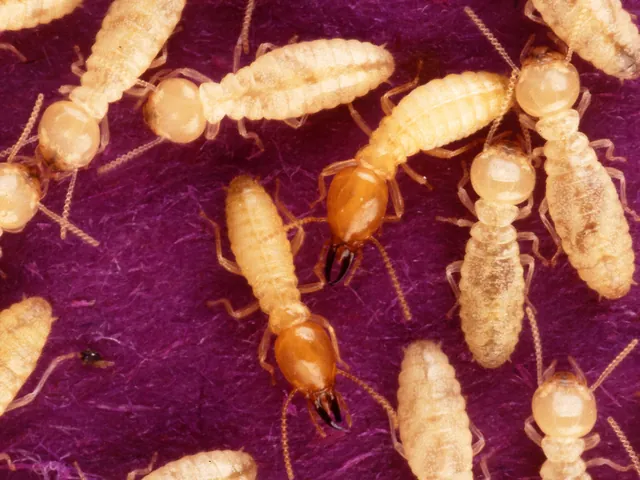
Signs of termites
- Thin mud tubes running up walls, pipes or the edges of tiles
- Door frames or skirting boards that sound hollow when tapped
- Wood that crumbles or has a layered, honeycomb pattern inside
- Swarms of small winged insects indoors, often after rain
- Bubbling or peeling paint on walls near the floor
How we treat it
Inspection
We trace mud tubes and damaged wood back to where the termites enter, and check the garden, boundary walls and any timber in contact with soil.
Treatment
Depending on the building, this is a chemical barrier injected into the soil and entry points, a baiting system that eliminates the colony, or both.
Monitoring
Termite work needs checking over time. We agree a monitoring schedule so any new activity is caught early.
How to prepare for the visit
- Do not break or remove mud tubes before the inspection. They show us the entry route
- Clear access to skirting boards, built-in cupboards and the garden edges
- Move firewood, timber and cardboard away from the villa walls
Termite control: frequently asked questions
Do new buildings in Dubai need termite treatment?
Anti-termite treatment of the soil before the slab is poured is standard practice for new construction in Dubai. We can treat new builds and extensions at the foundation stage.
How do I know if termite damage is old or active?
Active termites keep their mud tubes intact and moist. If you break a small section and it is rebuilt within a few days, the colony is active. An inspection confirms it quickly.
Are termites covered by a single visit?
Termite control is a process rather than a one-off spray. The treatment itself may be one visit, but monitoring afterwards is what protects the building.
Termite control in these Dubai areas
Jumeirah, Arabian Ranches, Mirdif and Al Barsha, along with the rest of Dubai.